Why Sharp Tips Bark Better in Hot, Dry Summer Conditions
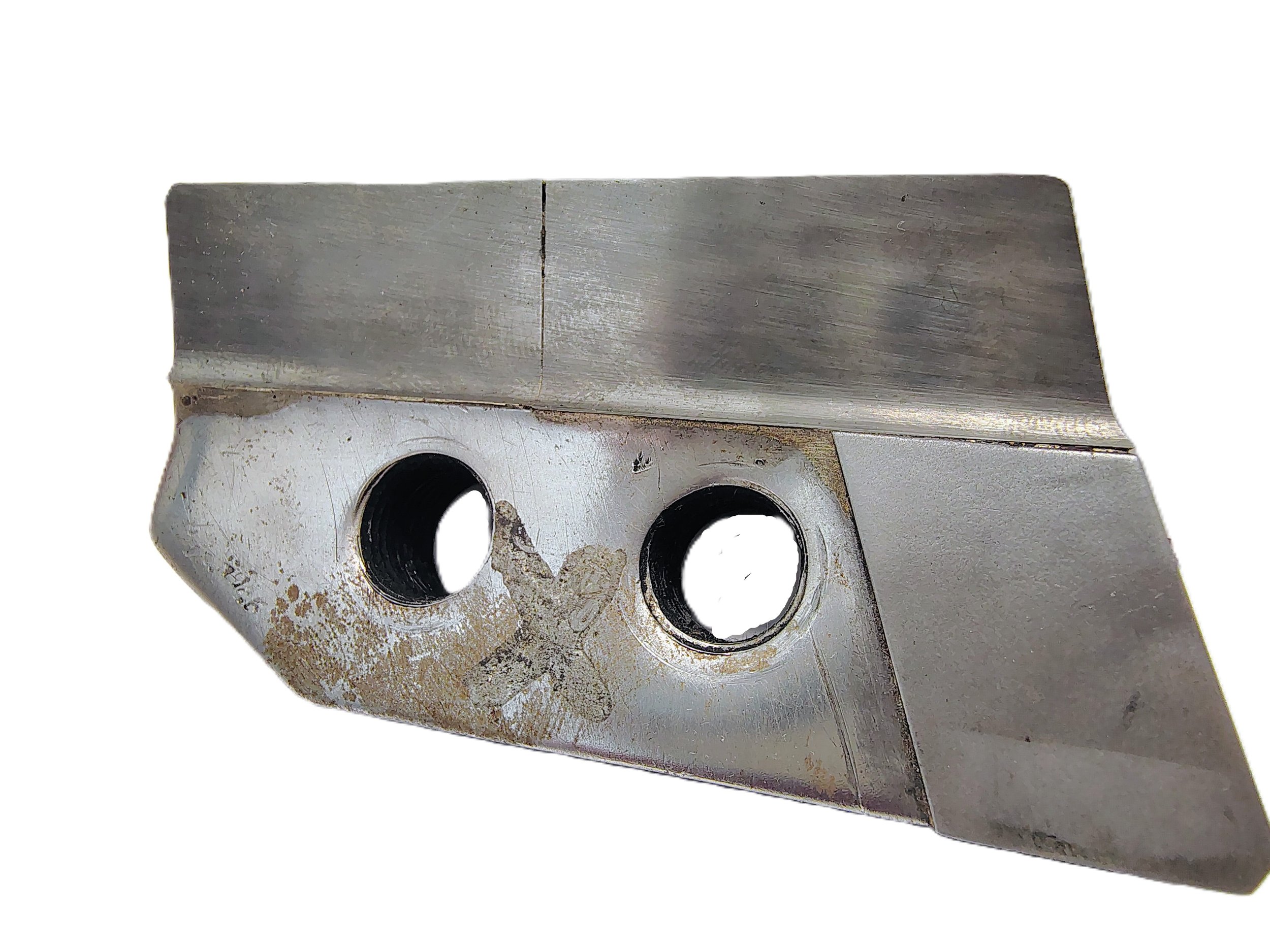
Hot, dry summer weather can turn routine debarking into a tougher job fast—heat and low humidity pull moisture out of bark and tighten it up on the log. As bark moisture drops to seasonal lows, debarker tip sharpness becomes critical for clean separation instead of skating, tearing, or leaving patches behind on the log. Maintaining sharp tips ensures that debarking quality remains high, even when summer conditions become more challenging.
The Dry Season Challenge
In hot, dry summer conditions, falling humidity and rising temperatures cause bark to become denser and more brittle, complicating the debarking process. Summer-hardened bark leads to inconsistent removal, increased slippage, bounce, and localized impact, necessitating more aggressive machine settings. This raises the risk of wood fiber damage and accelerates wear on components, resulting in higher maintenance demands and unstable performance. Additionally, summer-dry bark diminishes debarking efficiency, resulting in subsequent challenges such as higher bark content on logs and chips, as well as slower line speeds, especially during peak operating times.
Why Sharp Tips Make the Difference
Sharp debarker tips enhance force concentration at the contact point, enabling better penetration into tough, dry bark with reduced pressure. With a defined edge, they allow for predictable separation between bark and wood, leading to consistent bark lift and fewer missed spots. Dull tips require increased contact time and pressure, causing higher power draw and mechanical stress, particularly in hot conditions, which can lead to heat, vibration, and wear. Sharp tips minimize friction, maintaining performance with lower energy consumption. They also protect log quality by removing bark cleanly, reducing fiber tear-out and surface damage, ensuring consistent quality and fewer defects.
Carbide Tips vs. Laser 3D Printed: Which Stays Sharper Longer?
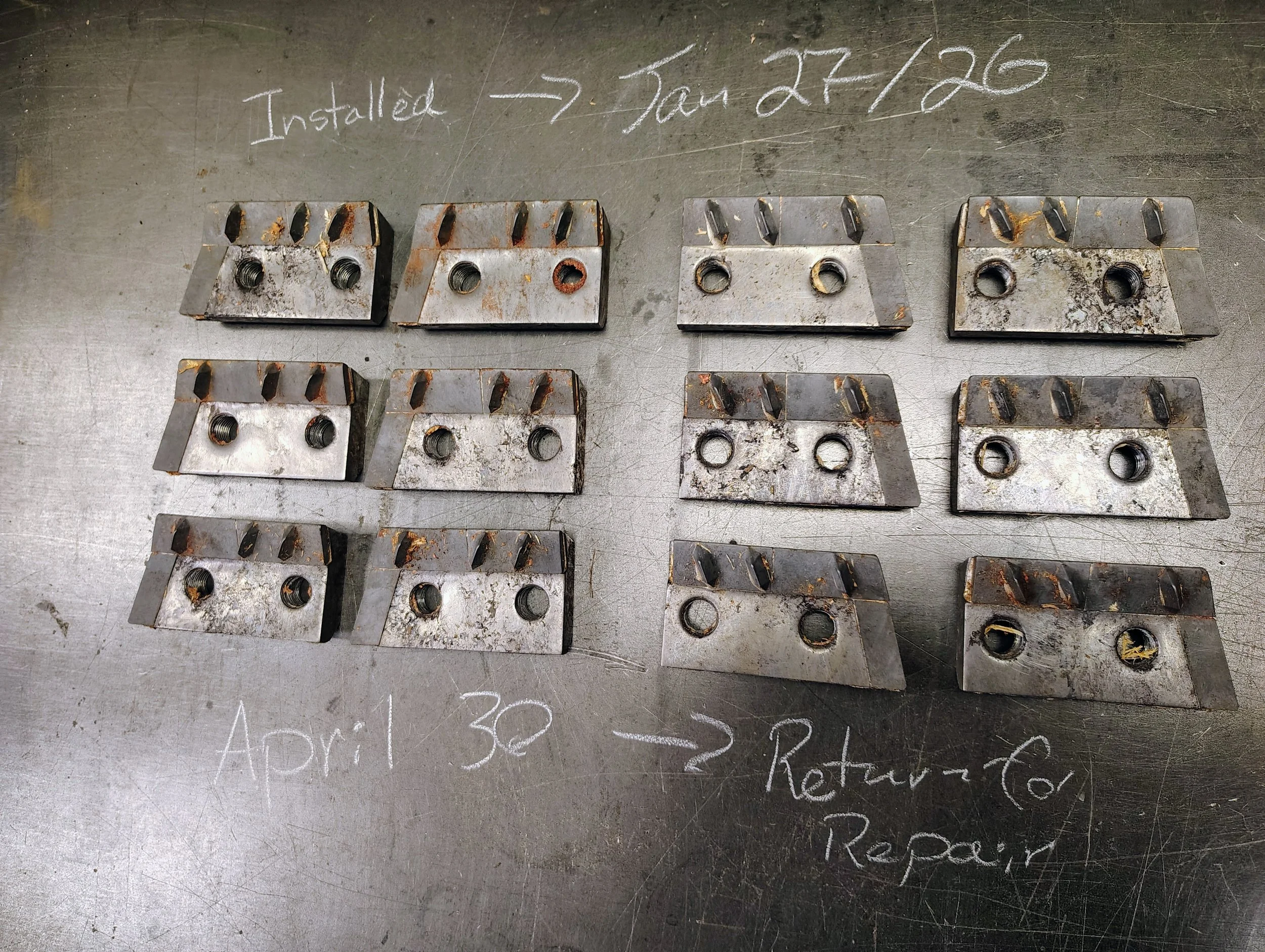
When selecting tips for hot, dry summer runs, tip type is crucial for maintaining sharpness. Carbide inlay tips usually outperform laser 3D printed designs due to higher hardness and wear resistance, allowing them to retain a sharp cutting edge longer, which means fewer changes and longer intervals before replacement. They can also be resharpened multiple times depending on your inspection intervals, adding to their long-term value during high-demand summer operations. Conversely, laser 3D printed tips can be more cost-effective in wet and rocky conditions but require higher changeouts in harsh conditions. Overall, carbide tips offer better long-term value for minimizing downtime and ensuring consistent performance. Below are some Triple scoring “Bear claw” tips after 3x months of intense use returned to Webco for new carbide installation.
When to Replace vs. Sharpen
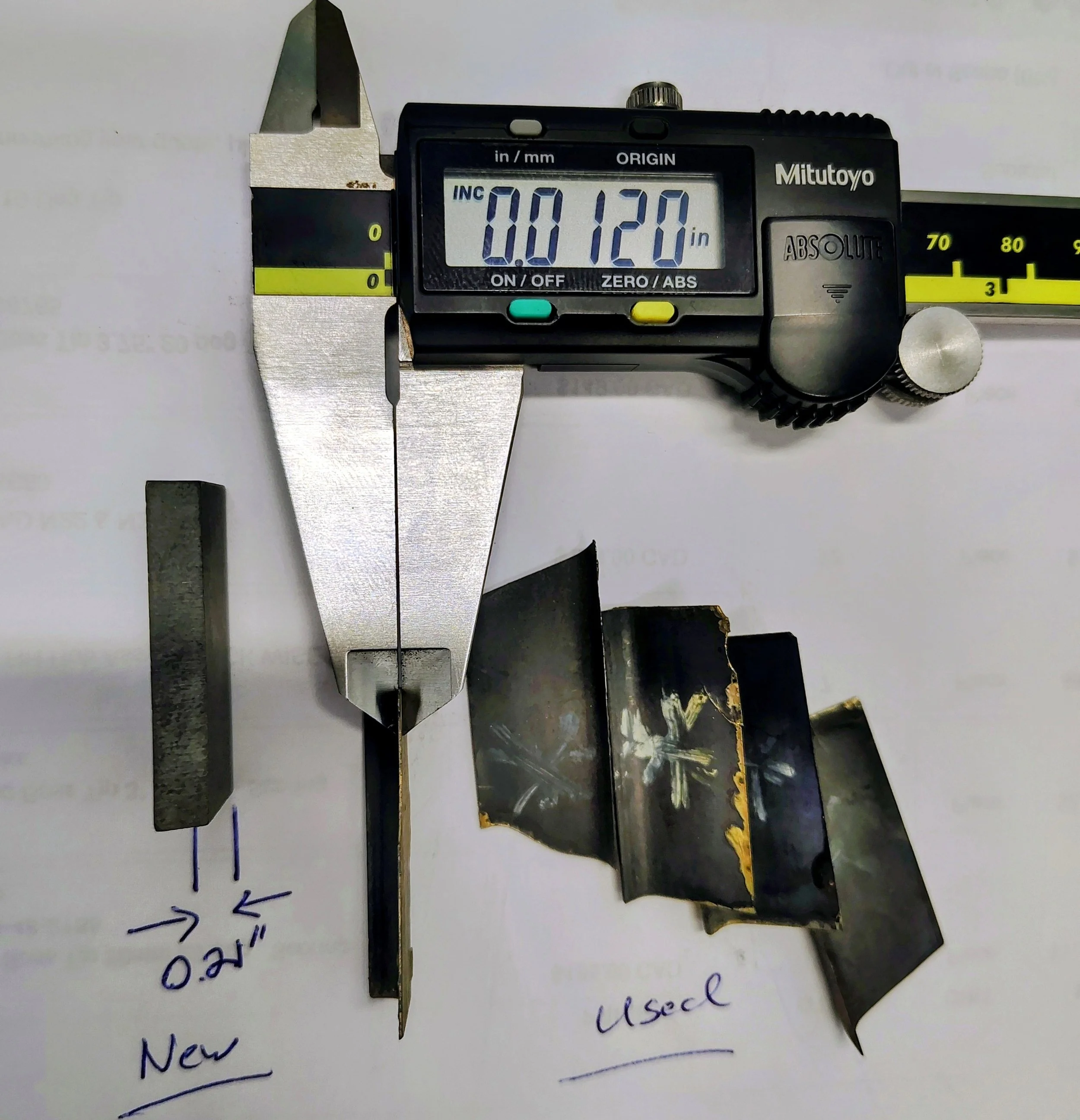
Sharpening is suitable when the tip has enough material and no major damage. Inspect for uniform wear and a stable interface; avoid sharpening if it alters the geometry significantly. Carbide can be replaced in tips with cracks, severe wear or chipping as long as the body has not had any major impact or damage. Establishing clear standards for replacement versus sharpening helps maintain performance and prevent damage. Below is some Webco carbide that has been stripped out with 5% carbide remaining at a thickness of 0.012” from a customer which used this tip 25 to 30 times before sending it to us for new carbide!