
Echoes of a Timber Legacy - Hope’s histroric Sawmills and Logging Operations
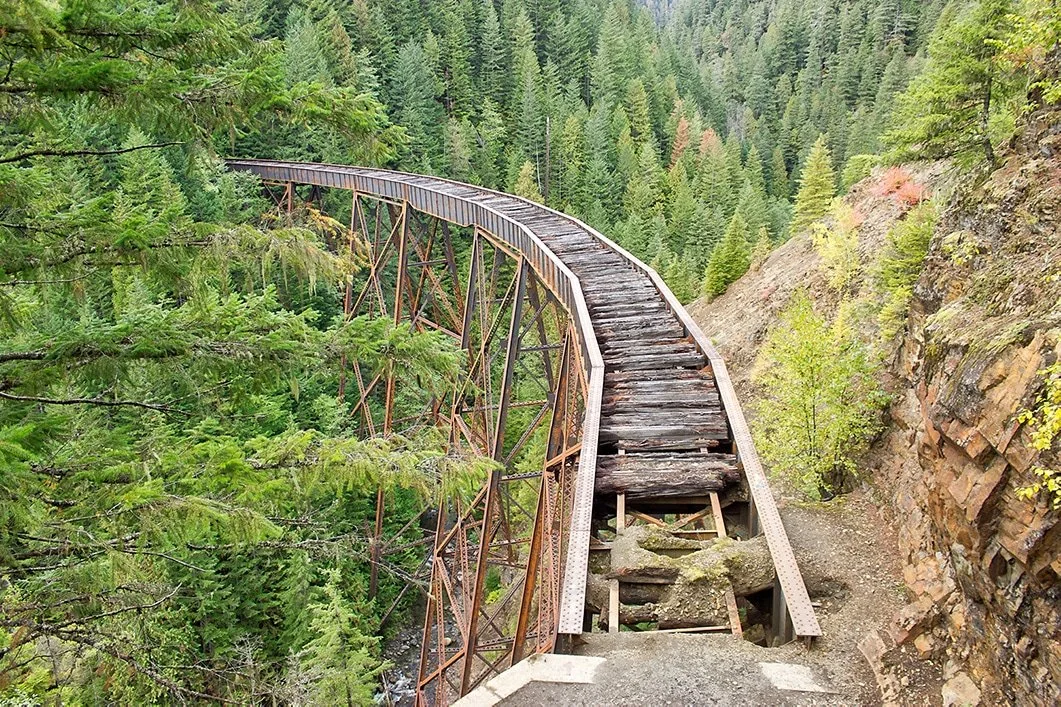
Ladner Creek Train Trestle - Hope BC
Hope, BC’s and local Fraser Valley timber story was shaped by saws, river water, railways and highways. As a key intersection for the CPR, KVR, and CNR railways, and situated where the Fraser and Coquihalla rivers meet and at the junction of three major highways, Hope naturally evolved into a central hub for transporting timber, supplying nearby mills, and supporting rapidly expanding settlements. Helping turn wood, labor, and persistence into the sturdy foundation of the town’s early identity and enduring character.
Early Foundations and Growth
Hope’s first sawmills appeared in the 1800s, when settlers used nearby forests and river access to make milling viable. The Fraser River served as a logging route, while the gold rush and later railway construction pushed lumber demand higher. Small, practical mills emerged first, then expanded as local timber moved into regional markets. By the 1920s through the 1960s, milling reached its peak, with operators processing Douglas fir, cedar, and hemlock. These years tied Hope’s economy to wood products, jobs, and the steady movement of logs through the valley.
Life in a Mill Town
Life in Hope revolved around long shifts, early starts, and the constant rhythm of mill work. Workers dealt with dust, noise, and heavy equipment, while families built daily life around shared work and mutual reliance. The smell of cut wood, the sight of stacked lumber, and the mill whistle all became part of the town’s identity. That close-knit culture gave Hope a practical, resilient spirit that shaped everyday life.
Decline and Closure
Like many resource towns, Hope’s mills faced rising costs, tighter competition, and changing markets that made small operators harder to sustain. Automation reduced labor needs, while regulations and dwindling old-growth supply changed how logging could continue. By the late 20th century, many major operations had closed or scaled back, ending a long industrial era. What remains is a landscape of memory, transition, and the traces of a once-dominant timber economy. The mix of companies and contractors gave the valley a flexible timber economy, with mills rising and fading as demand, access, and supply changed.
Historical and Notable Sawmills
Hope Sawmill Company (1858 to 1870) — The mill was established in June 1858 by John Coe, H. White, and Daniel C. Patterson. Their formal operating license was granted by Crown Commissioner Richard Hicks. It was hastily constructed during the Fraser Canyon Gold Rush to supply wood for building construction and packing boxes as a massive influx of miners arrived at Fort Hope
Emory Creek Sawmill (1879 to 1881): The sawmill was established when Emory City became the temporary western terminus for the Canadian Pacific Railway (CPR). At its peak, the mill operated around the clock, producing 21,000 board feet of lumber per 24-hour shift to build the frontier boomtown (That is approx. 7.6 MMfbm annually, today’ average major sawmill in British Columbia (BC) is estimated to produce between 175 million to 300+ million board feet (MMfbm) annually, depending on whether it is a smaller coastal plant or a large, high-capacity interior mill)
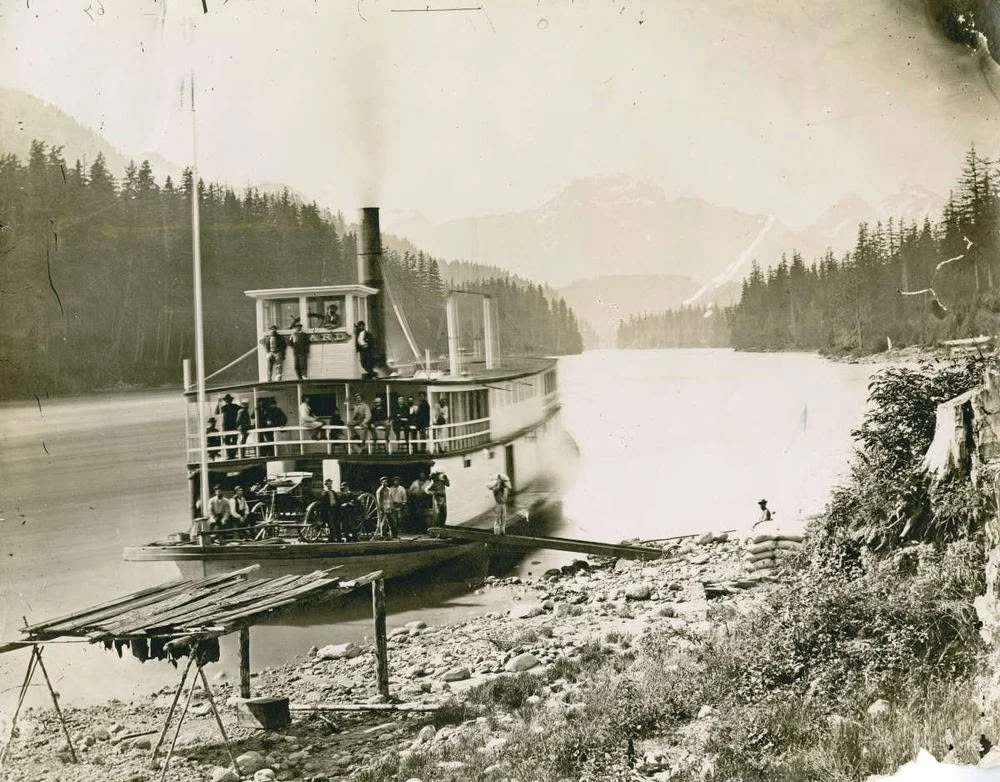
The SS Onward at Emory Bar circa 1867
Credit https://www.facebook.com/photo?fbid=1138615010716881&set=pcb.10161918897367044
William Flood’s Sawmill (Early 1900s): Operated by William Lewis Flood, an early pioneer who settled in the district in 1894. His mill operations were so prominent that both the Canadian Pacific Railway station and the modern Flood-Hope Road were named after him.
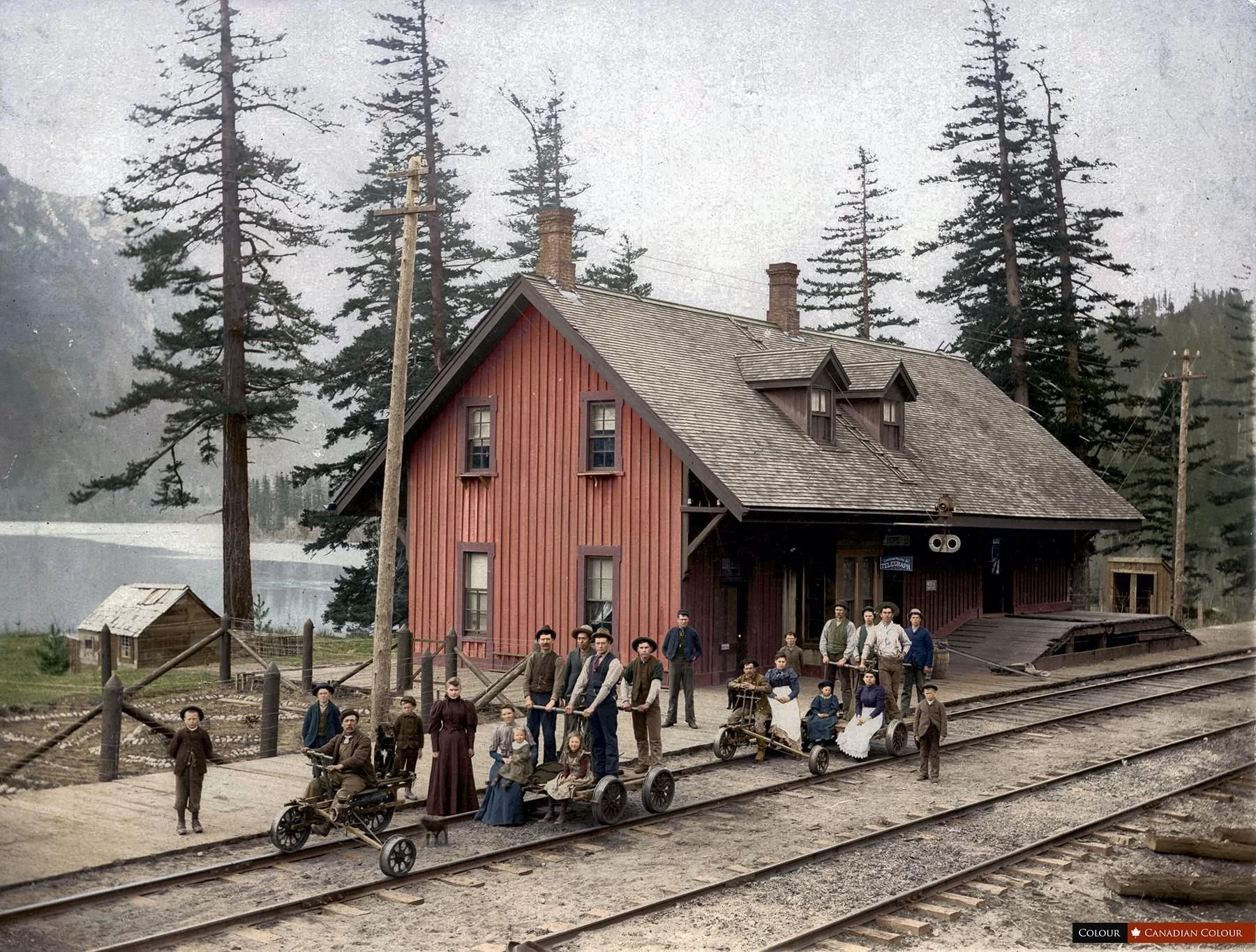
Hope BC CPR Station 1897
Credit : https://www.pinterest.com/pin/hope-cpr-station-bc-1897-canadian-colour--468726273698498511/
The Whitworth Portable Sawmill (Early 1900s): A portable lumber operation brought into the nearby Skagit Valley/Silver Creek area by the Whitworth family to clear land and build a 10-room homestead.
Silver-Coqu Cedar Products (Early 1900s, closed in 2016): A primary wood processing facility that operated directly out of Hope. It specialized in processing regional cedar into shakes and shingles.
Kawkawa Lake Lumber Company (Early 1910s) — a Hope-area producer that reflected the shift from hand-built mills to more organized lumber operations serving local and regional buyers.
Decco-Walton Logging Company (1940s to 1960s) - This was one of the most famous and massive historic truck-logging shows in the region which pioneered industrial truck-logging techniques and reshaped the geography of the Skagit Valley. Decco-Walton was contracted to clear-cut the massive timber reserves in the Canadian portion of the Skagit Valley ahead of a planned expansion of the Ross Dam reservoir by Seattle City Light. The company employed hundreds of loggers and they utilized specialized, oversized logging trucks to move the massive hauls. The logs were brought to the International Booming Grounds at Bristol Island in Hope, where they were boomed and towed down the Fraser River by tugboats. This massive operation laid the groundwork for regional marine and towing giants like Rivtow and triggered a massive economic boom for Hope.
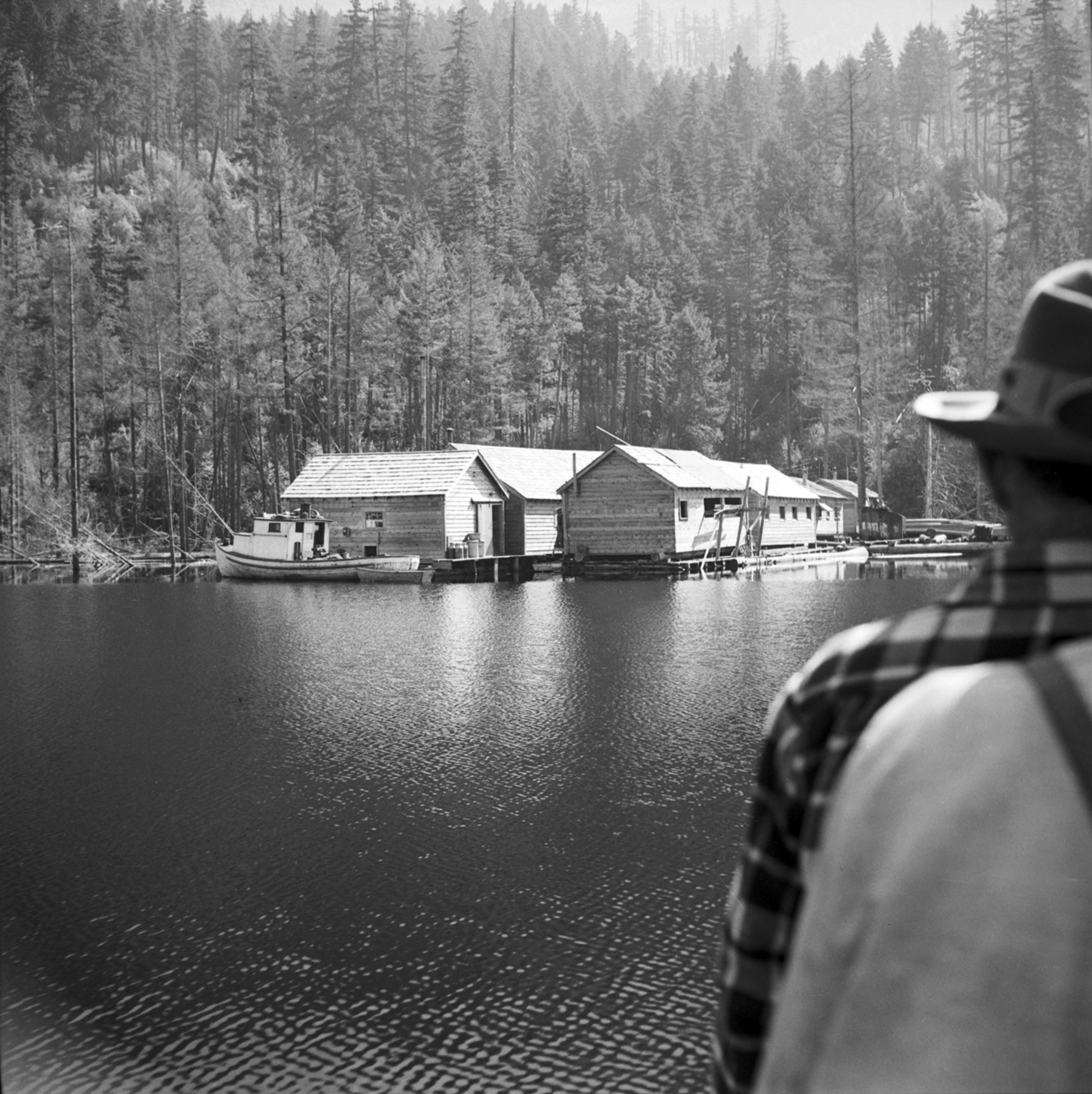
Decco-Walton Logging Company, floating logging camp at Hope, British Columbia, 1950
Credit: Item 200980, City Light Negatives (Record Series 1204-01), Seattle Municipal Archives

Decco Walton unloads Skagit Valley timber logs into the Fraser River at the Bristol Island log dump, Hope BC
Credit https://hopestandard.com/2012/02/09/balancing-energy-and-the-environment/
Corbett Lumber Company (1940 to 1969) was one of the most prominent, influential family-run logging and milling operations in the history of Hope, British Columbia. The operation was driven by Irvine Finlay Corbett alongside his four brothers in 1940. After operating for just one year in Hope, the original sawmill burned down in 1941. The Corbett brothers immediately rebuilt it and continued expanding their operations. The Corbett Lumber Company held major logging rights and active operations throughout the Coquihalla watershed, feeding timber directly down to their central mill in Hope.
Tashme Internment Camp Sawmill (1942–1946): Located just east of Hope in the Sunshine Valley, this sawmill was purpose-built and operated by interned Japanese-Canadians during World War II. The lumber milled here was used to construct the camp's shacks, municipal infrastructure, and sections of the Hope-Princeton Highway.
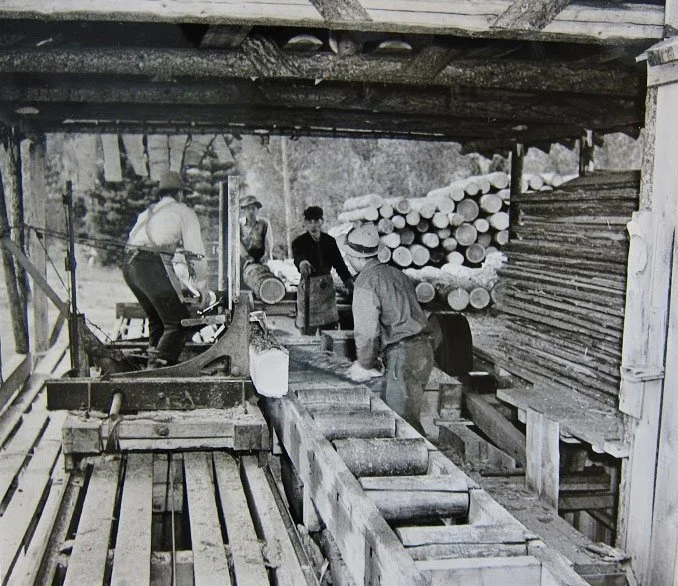
Tashme Internment Camp Sawmill, Credit http://tashme.ca/camp-description/buildings/LAC RG 25 Acc. 1997-032
Boston Bar Sawmill (1951 to 2001)— The sawmill history of Boston Bar, BC spans more than seven decades, transforming the rugged Fraser Canyon community from a historic railway town into a booming industrial forestry hub before its eventual economic shift. Throughout its history, it was operated or acquired by a few different forestry companies, including Keery Sawmills Ltd., Hampton Lumber (1964 to 1993) and J.S. Jones Timber Ltd. / Teal-Jones Group. (1993 to 2001)
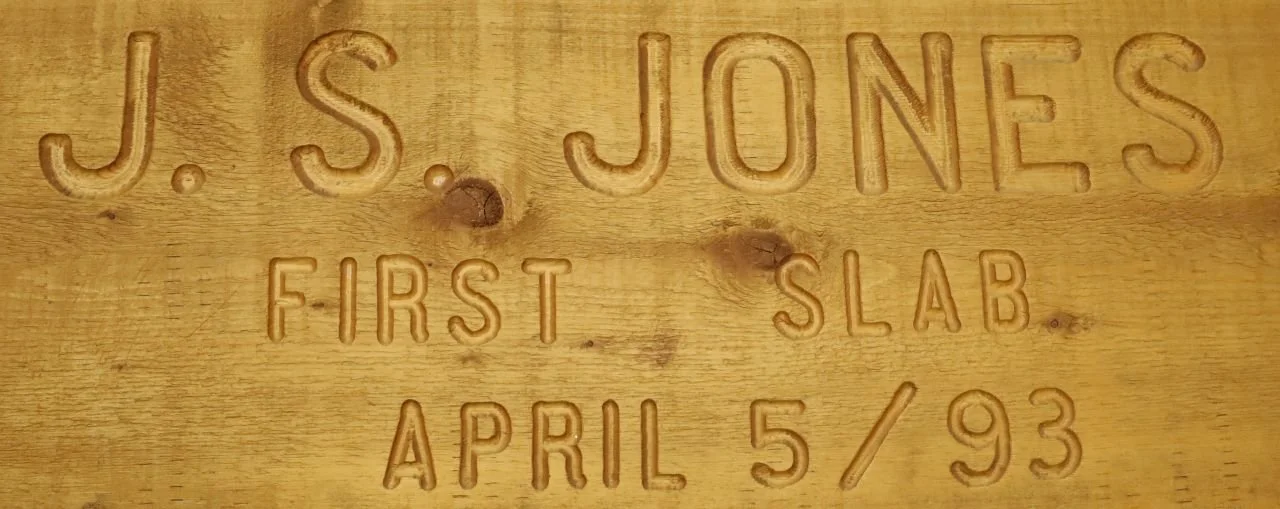
J.S. Jones - First Slab April 5, 1993 Boston Bar
Credit : https://www.linkedin.com/company/the-teal-jones-group/posts/?feedView=images
Local Logging Operations
Interfor (International Forest Products) (1976 to 2002): Interfor operated a significant footprint in the area, historically utilizing a large dryland sort and mill-support base on a 20-acre site in Hope. While major primary sawmilling has consolidated away from the immediate town centre, this location remains a massive operational hub for regional forestry equipment.

Western Canadian Timber Products Ltd. (1999 to Current): is a major, family-owned forestry and timber harvesting company that has been operating in the Fraser Valley and Lower Mainland regions since 1999. It represents the evolution of several well-known local logging entities, including Tamihi Logging Co. Ltd., The Dorman Group, and Dorman Timber Ltd providing essential operations in the Coquihalla and the wider Fraser Valley regions for logging and timber marketing.
Solano Resources Inc. (2016 to Current): A construction and forestry contractor that has actively handled major right-of-way, clearing, and road reconstruction projects in the immediate Hope and Spuzzum regions
Regional Fraser Valley Contractors (Current): Nearby operators frequently contracted for woodlot harvesting and hauling around Hope include Tolsons Enterprises Ltd., Ivor Forest Products Ltd., and Dryco Industries Ltd.
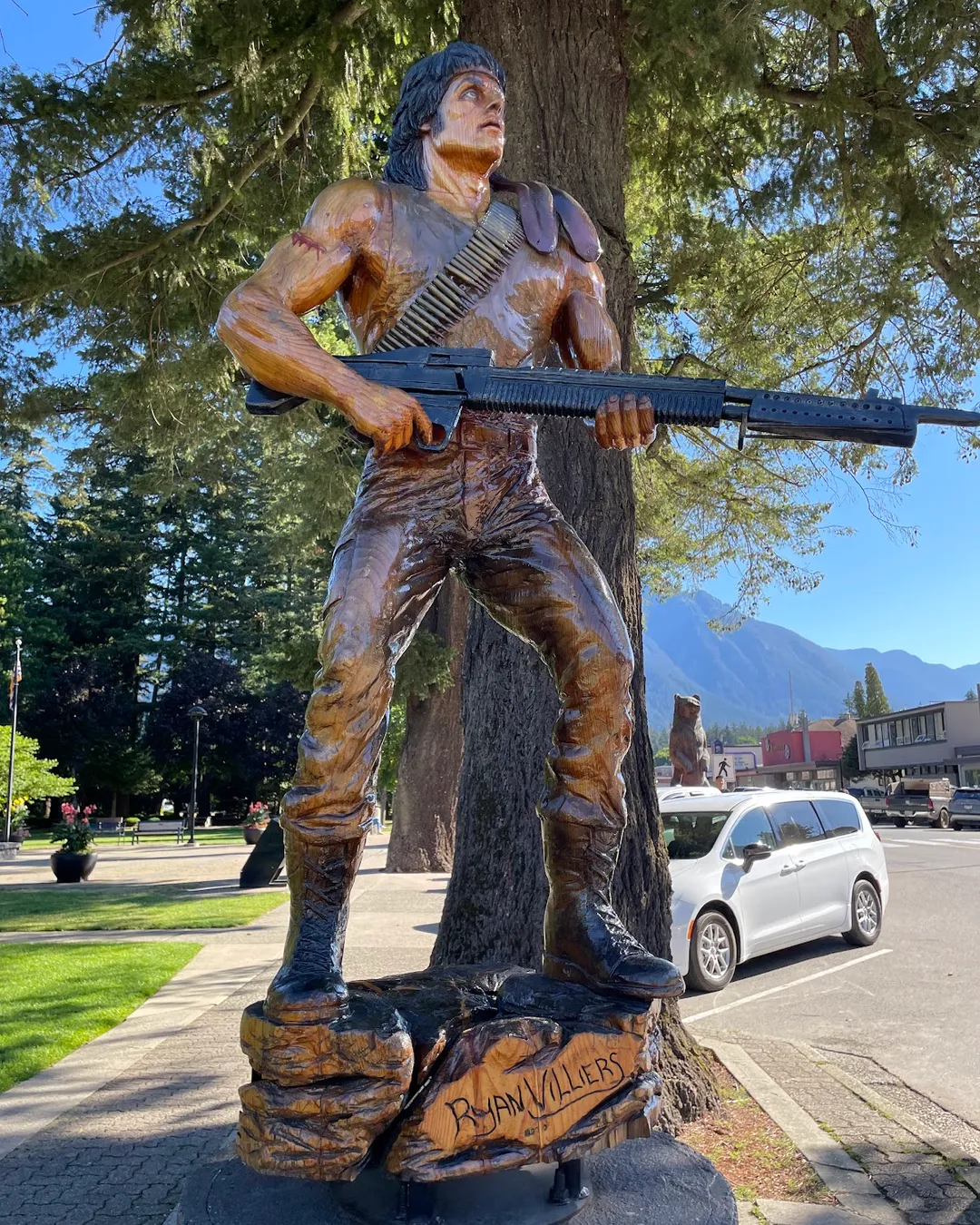
Rambo Chain Saw Carving downtown Hope BC, 2026