
Webco Debarking Tip Angles
The tip angle, also known as the cutting rake angle, is the critical angle between the tip’s face (where bark flows) and an imaginary line perpendicular to the log surface; it directly influences tip strength, bark chip formation, and the amount of heat generated by the debarking operation. Because the binding strength between bark and wood changes throughout the year for all species, it is important to adjust your tip angles to suit the current season and prevailing outside temperatures to maintain debarking performance and reduce wear.
DEBARKING ONLY HAS 3X SEASONS
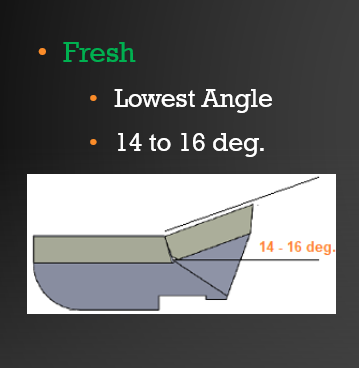
Fresh
Typically March to June in the Pacific Northwest region. This season is when the tree experiences the most sap flow, which in turn produces the fastest growth. That rapid growth leads to a weaker bark bond, so mills generally require a less aggressive angle to remove the tree bark effectively.
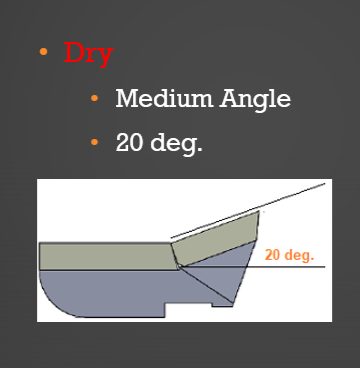
DRY
Typically July to October in Lower British Columbia. During this season the tree experiences slower growth, which results in a stronger bark bond to the wood. Most surface moisture has been removed and the bark has dried out thoroughly, so a steeper cutting angle will be required to effectively remove the hard, dry bark.
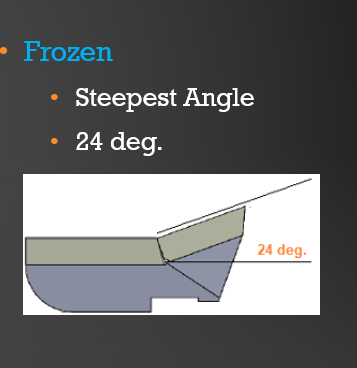
Frozen
Typically November to February for all parts of Canada. Bark temperature has dropped well below freezing (−10°C to −40°C), and any remaining moisture has increased the bark bond. Frozen bark bond can vary by species, but in most cases it requires a steeper angle and a slower feed speed to debark effectively.