
The Mechanics
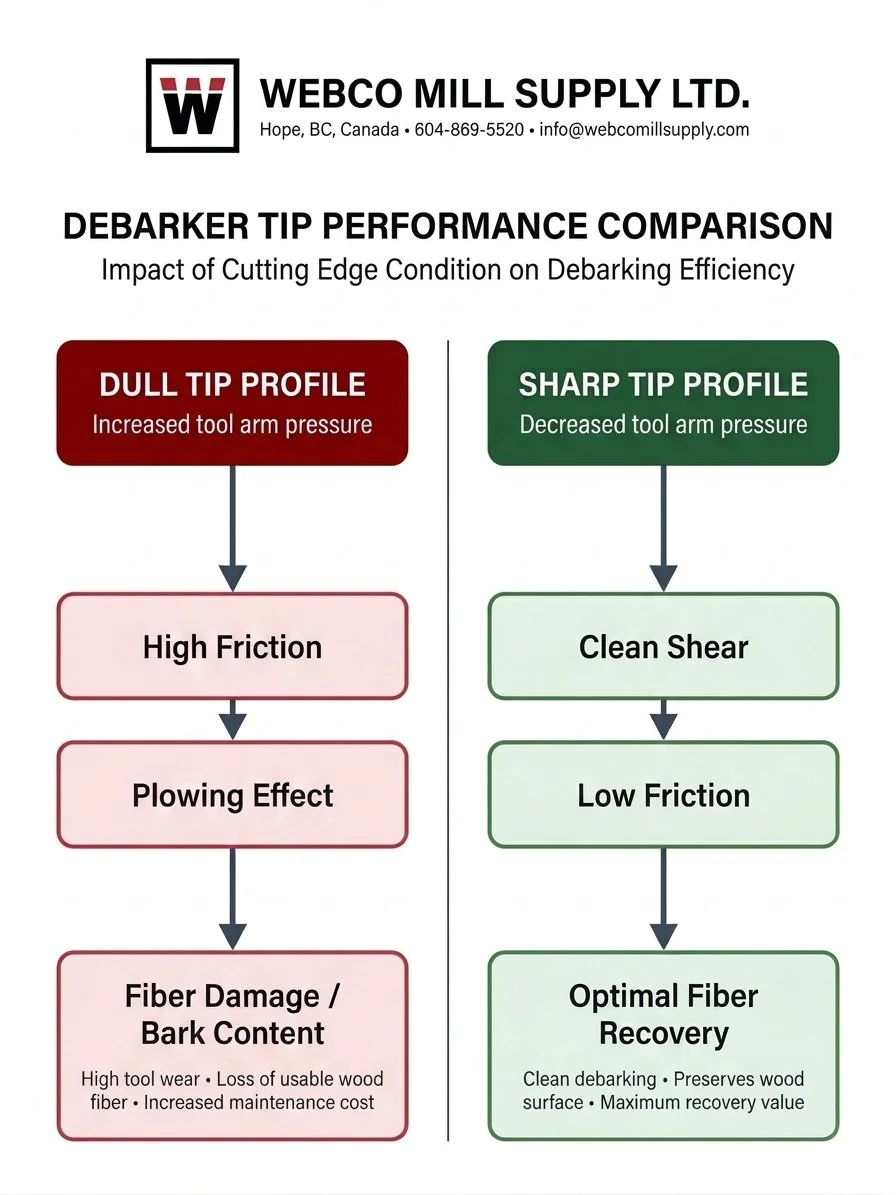
A ring debarker depends on a precise balance of arm pressure and tip geometry. The tip should initiate a clean fracture at the cambium layer, shearing bark away while gliding smoothly across the wood fiber. As the tip dulls, that clean shearing action disappears. Instead of cutting through bark, the worn edge begins to plow, increasing resistance and reducing debarking quality.
The Webco Tip Radius Gauge
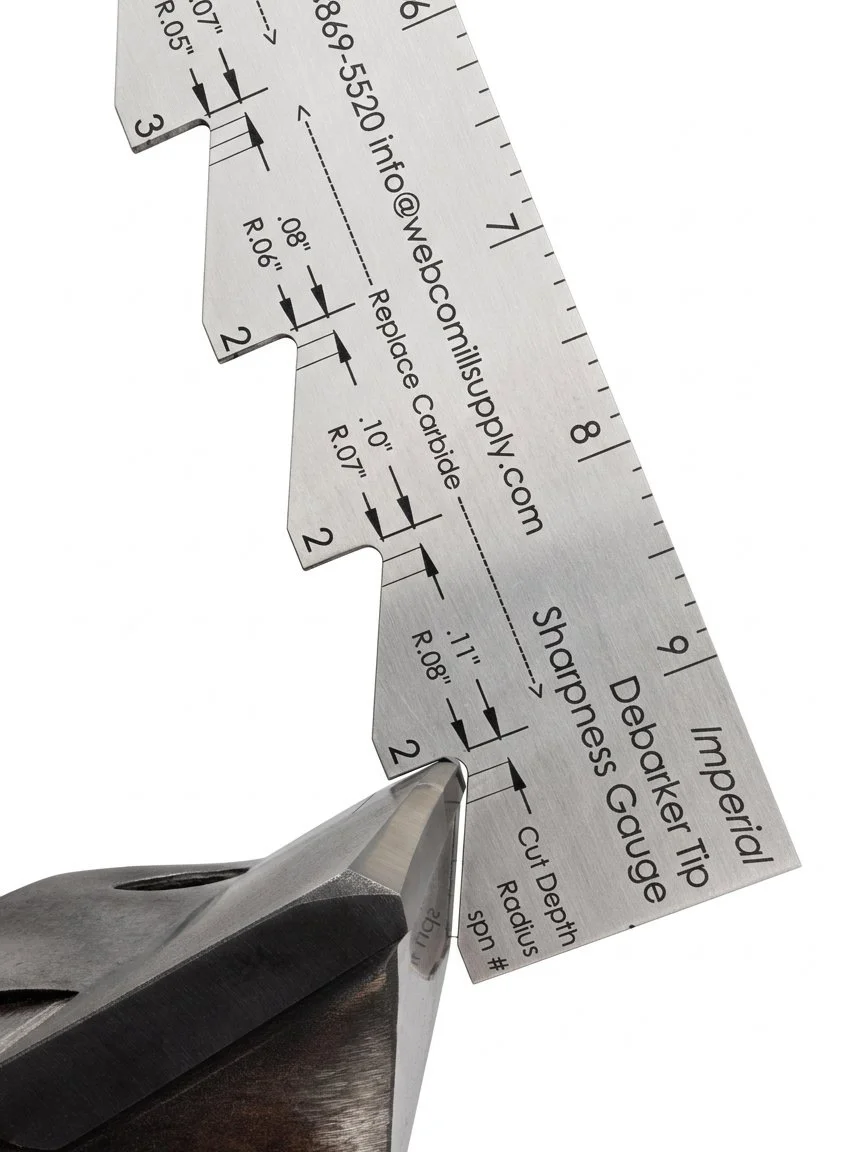
Evaluating and maintaining debarker tip sharpness is no longer guesswork. Webco’s Tip Sharpness Gauge turns wear measurement into a precise maintenance decision.
This gauge measures the carbide’s edge radius and indicates how deep of a cut is required to restore a sharp edge on your debarker tip.
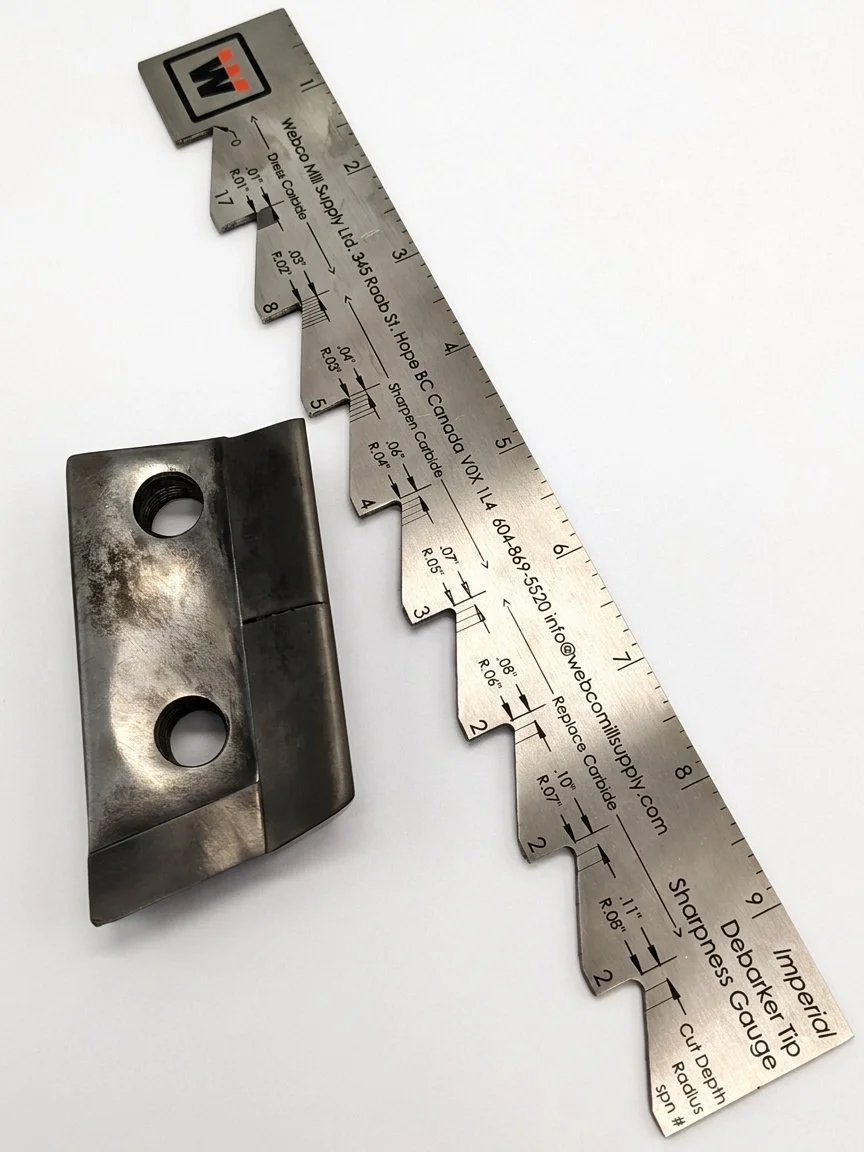
The tip shown above ran for SIX MONTHS at 400 ft/min during a single shift. The customer has received excellent, long-lasting service from this high-quality Webco Debarker tip.
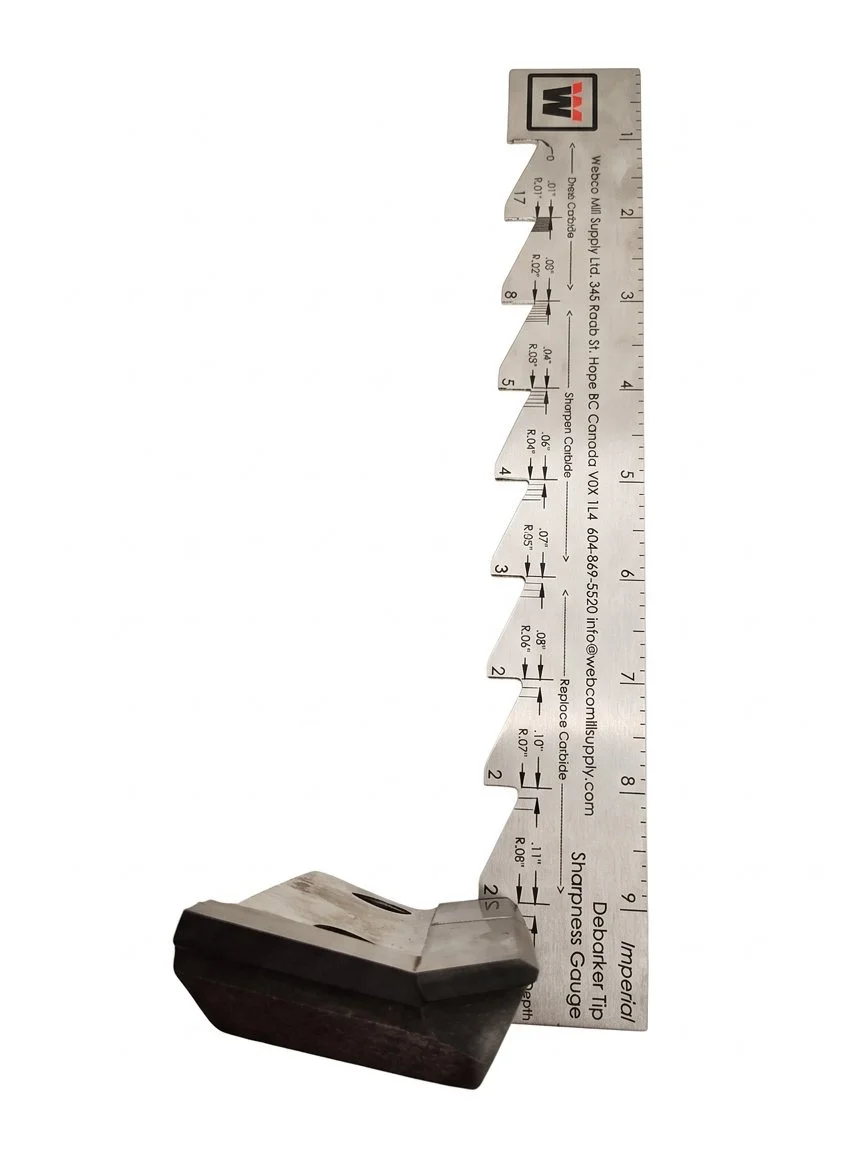
How to Measure Your Tip
Clean the tip: wipe pitch, bark, and debris from the cutting edge.
Match the notch: seat the carbide tip’s cutting edge into the gauge’s V-notches.
Check the fit: pick the notch where the rounded edge fits snugly against the inner radius with no light under it.
Read the results: read the numbers by that notch for Cut Depth, Edge Radius, and Estimated Remaining Sharpens (spn #).
Understanding the Gauge Readings
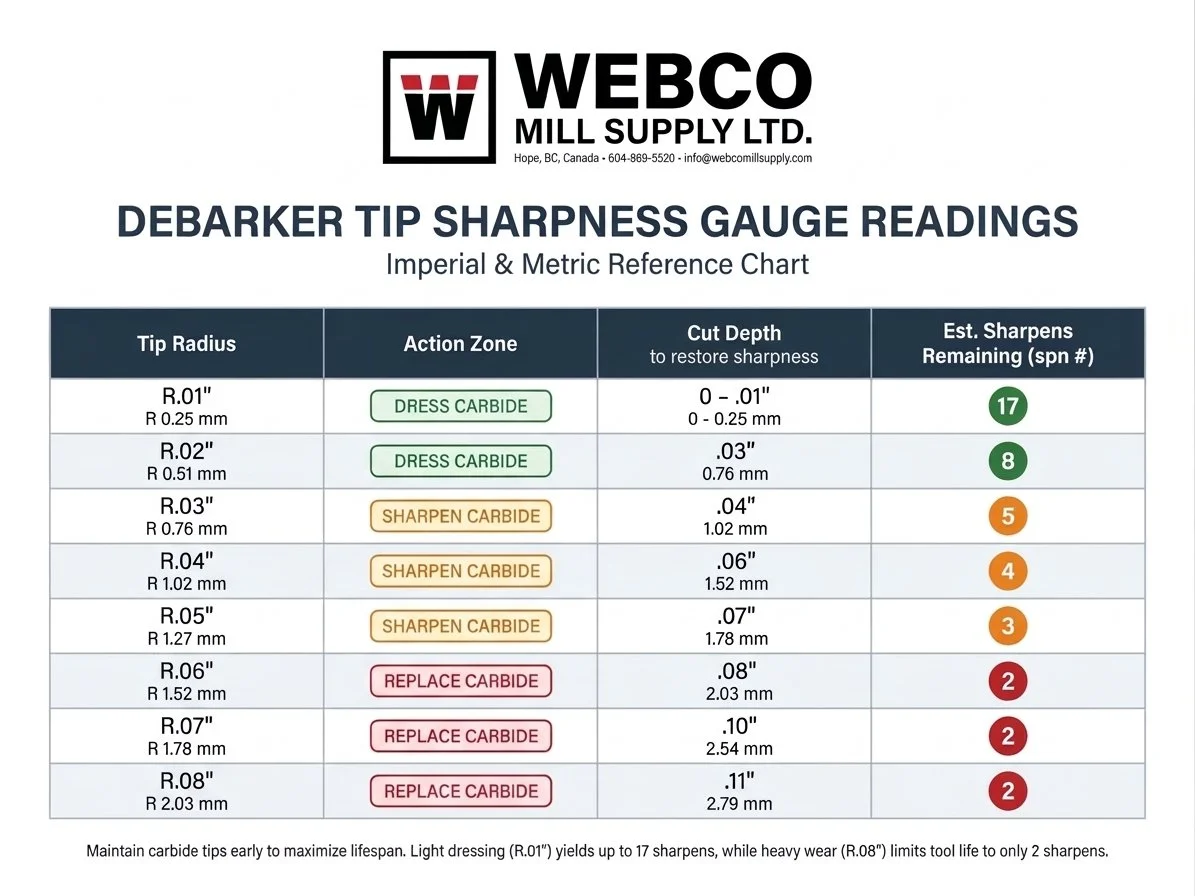
Why Early Maintenance Matters
• Light Touch-Ups = Maximum Life: Dressing your carbide early—when the wear is at a .01" cut depth (R.01" radius)—removes minimal material and yields up to 17 sharpens per tip.
• Heavy Wear = Lost Value: Allowing the tip to dull until the wear reaches a .11" cut depth (R.08" radius) requires grinding away significant carbide to restore a sharp edge, dropping your remaining life down to only 2 sharpens (or requiring full carbide replacement).
Webco Debarker Tip Repair Program
Webco provides sawmills with a cost-effective, fast-turnaround alternative to constantly purchasing new replacement tips. Rather than discarding worn tools, mills can send in used tips to have damaged carbide replaced and restored using specialized brazing techniques that ensure a solid steel-carbide bond built to withstand extreme wear and high-impact debarking conditions. Each tip is carefully inspected and only recommended for full replacement if it is beyond economical repair, helping mills significantly lower maintenance costs, minimize downtime, and extend the overall service life of their debarking consumables.
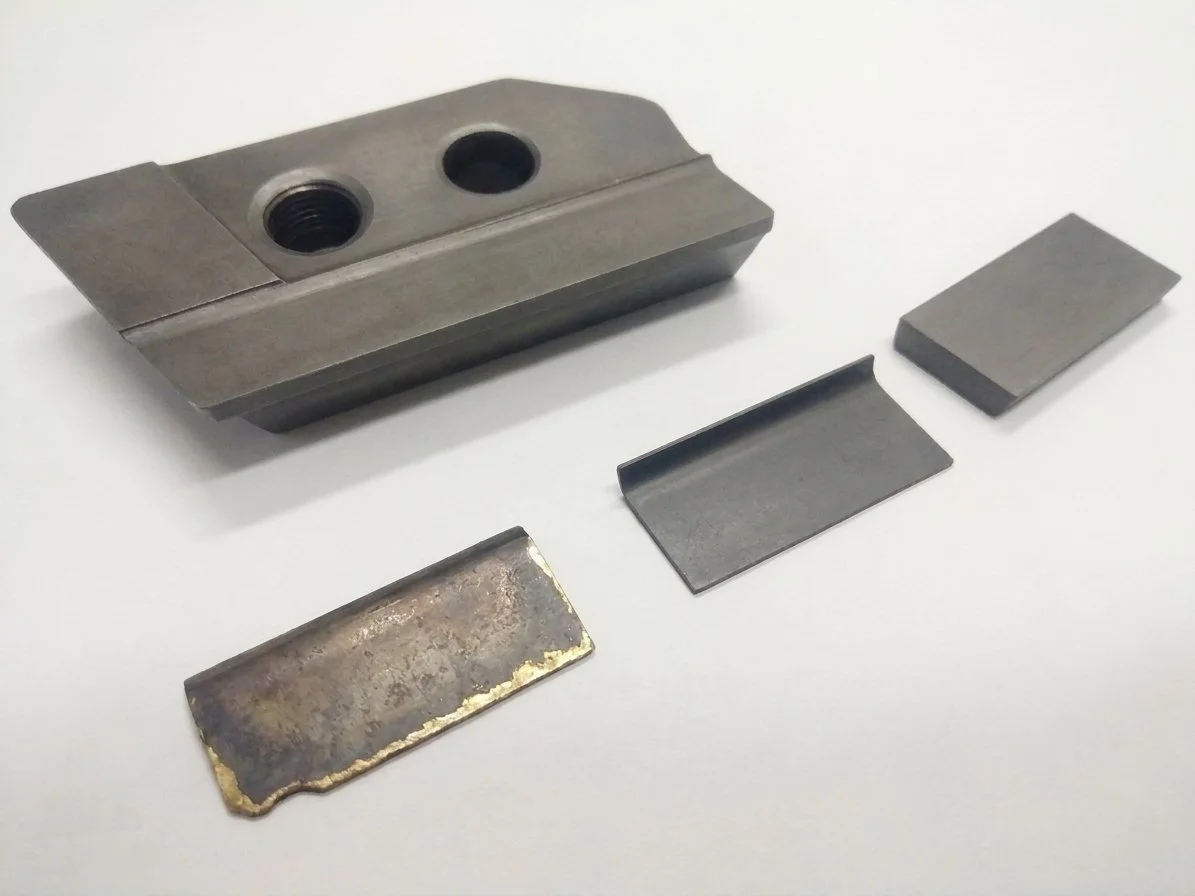
Customer achieves the maximum usable life of each tip before sending them to Webco Mill Supply for new carbide installation. The carbide removed measures 0.185” (0.47 mm) in thickness after 15+ sharpens.
The Cost of Neglect
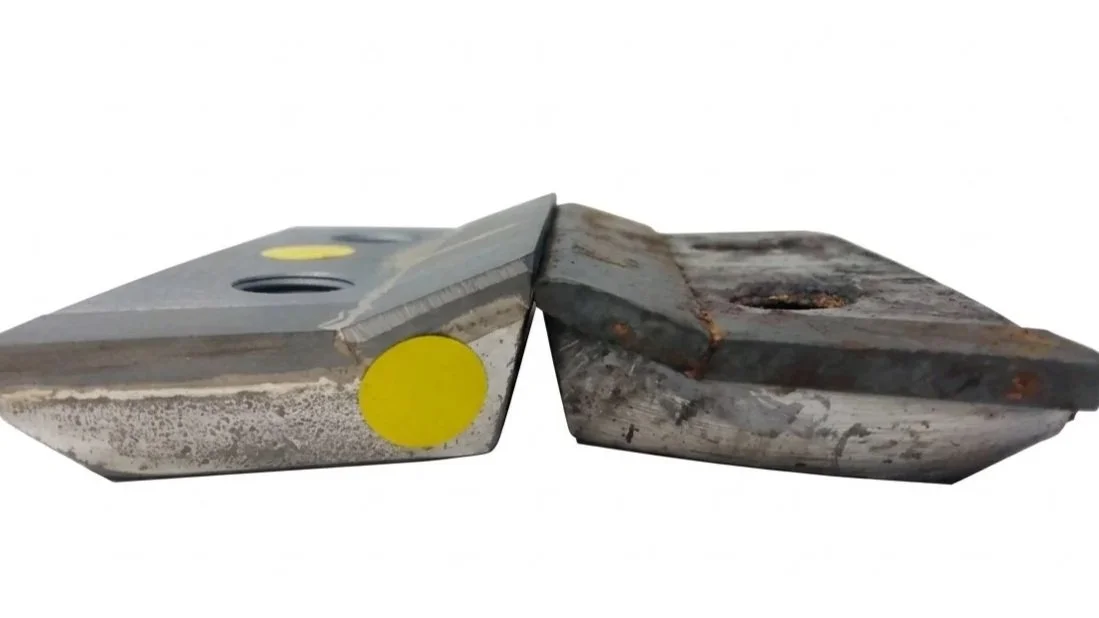
Operating with dull debarker tips triggers a costly domino effect down the line in addition to the latest carbide part pricing increases for new parts. Wood fiber damaged during a sloppy debarking process results in lower-grade lumber and chips containing too much bark residue, which can ruin batches at pulp mills. Furthermore, the extra resistance forces the debarker motor to draw more power, increasing energy costs and accelerating mechanical wear on the ring bearings.
By implementing strict shift-by-shift inspection schedules and utilizing precision grinding equipment, top-tier sawmills are proving that keeping a sharp eye on debarker tips is one of the easiest ways to keep mill profits razor-sharp.